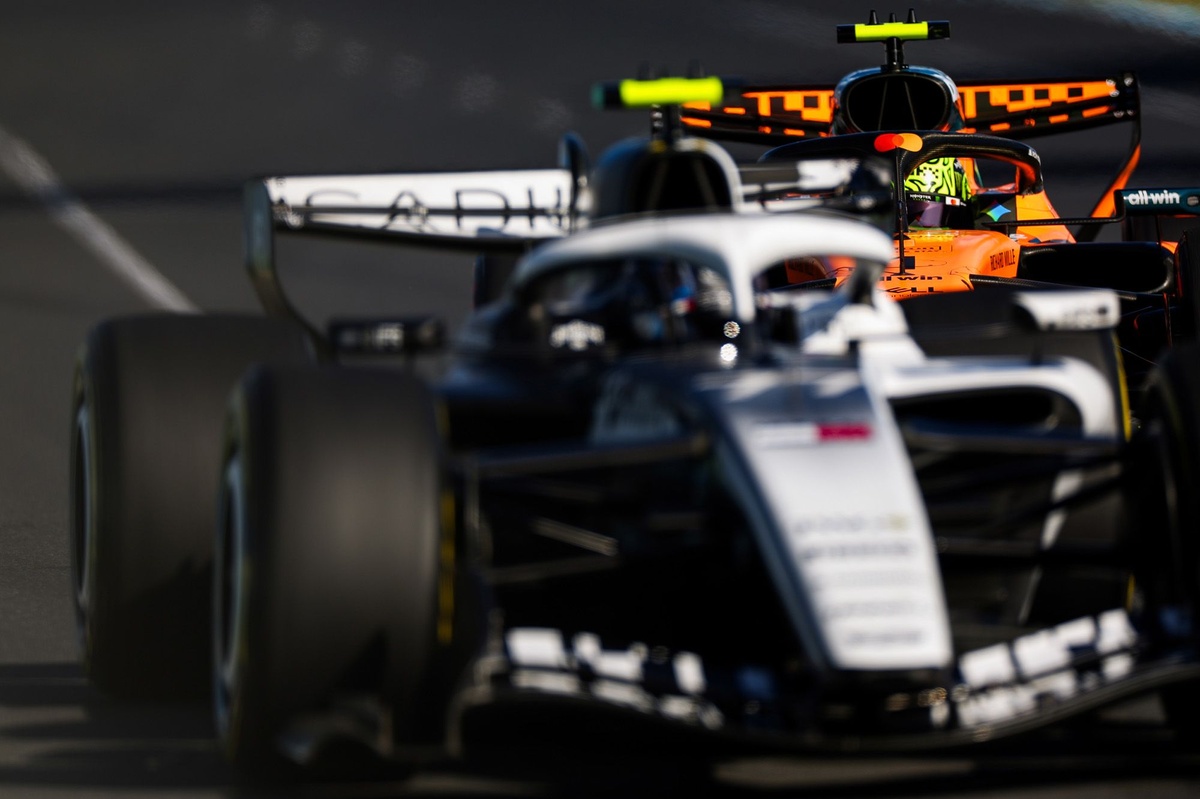
New F1 Cars: Energy Management to Disrupt Australian GP Quali
The exhilarating world of Formula 1 is on the cusp of a revolutionary transformation, with the upcoming 2026 regulations promising to redefine the very essence of racing. At the heart of this evolution lies a dramatic overhaul of the power units, featuring a near 50:50 split between traditional combustion and electric power. This shift places an unprecedented emphasis on energy management, a strategic chess game that could fundamentally alter the landscape of qualifying sessions, especially at high-speed, challenging circuits like the Australian Grand Prix at Albert Park. The australia f1 potential for unpredictable drama and tactical brilliance has never been higher, promising a spectacle unlike anything fans have witnessed before.
Industry insiders, including Haas team boss Ayao Komatsu, have voiced concerns that the qualifying sessions under these new rules could descend into "complete chaos." The delicate balance of harvesting and deploying energy strategically to achieve the fastest possible lap times will demand an entirely new level of precision and tactical acumen from both drivers and teams. This isn't just about raw speed anymore; it's about intelligent energy deployment, a variable that could make or break a driver's weekend in Melbourne.
The Dawn of a New Power Unit Era: Energy Management Takes Center Stage
The 2026 Formula 1 season marks a pivotal moment with the introduction of revamped power units. While the exact specifications are still being refined, the core principle is clear: a significantly increased reliance on electric power. This change sees the MGU-H (Motor Generator Unit – Heat) removed, simplifying the power unit somewhat, but simultaneously augmenting the role of the MGU-K (Motor Generator Unit – Kinetic). The result is a propulsion system where the internal combustion engine (ICE) and the electric motor contribute almost equally to the car's overall power output.
What this means for drivers is a shift from purely maximizing engine performance to meticulously managing the energy flow throughout a lap. Drivers will need to "harvest" energy from braking and specific engine operations, storing it in the battery, and then "deploy" that energy strategically to gain speed on straights or critical acceleration zones. This isn't a passive system; it requires active, moment-by-moment decision-making, transforming every lap into a calculated energy expenditure exercise. The pursuit of optimal lap times will hinge not just on driving skill, but on a masterful understanding of energy dynamics, making the australia f1 potential for strategic depth truly fascinating.
Australian GP Qualifying: A "Potential for Disaster" or Strategic Masterclass?
The specific characteristics of the Australian Grand Prix circuit, Albert Park, are expected to amplify the challenges presented by the new power units. Its high-speed layout, coupled with a limited number of genuinely slow corners ideal for energy harvesting, creates a unique predicament. This combination has led many, including F1 stalwarts, to anticipate a qualifying session fraught with tension and unexpected outcomes.
The Out-Lap Conundrum: A Ballet of Speed and Strategy
One of the most significant concerns revolves around the out-lap during qualifying. Traditionally, an out-lap is about warming tires and getting into position. However, with the 2026 regulations, it becomes an integral part of energy management. As Ayao Komatsu articulated, "to charge the battery on the out-lap, certain corners you have to go slow, but certain straights you have to go flat out."
Imagine this scenario: a driver needs to go slow through a specific corner to maximize energy harvesting for their flying lap. But then, to fully charge the battery or prepare it for deployment, they need to unleash full power on a subsequent straight. Now, introduce traffic into this equation. If a driver is trying to execute this precise energy-harvesting and deployment strategy on their out-lap, and they encounter another car that slows them down on a straight where they *should* be flat out, their entire energy plan for the flying lap is compromised. Komatsu bluntly states, "you're screwed, aren't you?" This isn't merely an inconvenience; it's a potential lap-destroying event.
This challenge is further complicated by the need to maintain optimal tire temperatures. Going slow in corners for energy harvesting could lead to tires being too cold for the start of the flying lap, sacrificing grip and performance. Finding the "best trade-off" between energy preparation and tire readiness will be a monumental task for every team and driver, adding a fascinating layer to the F1 Australia: Why Qualifying Could Be a Disaster narrative.
Albert Park's Unique Challenges: High Speeds, High Stakes
Albert Park's circuit characteristics naturally exacerbate these issues. Its flowing, high-speed nature means there are fewer opportunities for sustained, low-speed energy harvesting compared to a tighter, more technical track. Drivers will need to meticulously manage their momentum, ensuring they have sufficient battery charge to begin their timed lap without having excessively drained it on the out-lap. McLaren chief designer Rob Marshall echoed these sentiments, highlighting the difficulty of "getting it bob-on" at the start/finish line, especially with traffic. This intricate balance makes Albert Park's Challenge: F1 2026 Qualifying Chaos Looms a very real concern.
Williams driver Alex Albon has already experienced a taste of this complexity, even in current machinery: "It's already very difficult... some laps you're gaining and losing a lot at that time. It doesn't always make sense behind the wheel, but that's just part of learning carefully." This suggests that the intuition drivers have built over years of racing will need to be recalibrated for the 2026 era, further amplifying the australia f1 potential for a truly unique race weekend.
Strategic Implications and Team Preparations
Given the complexity, the importance of practice sessions (FP1, FP2, FP3) will be magnified tenfold. Teams won't just be focusing on raw lap times; they'll be using these sessions as intensive "quali simulations" focused on operational procedures. This means simulating various energy management strategies on out-laps, testing the impact of traffic, and assessing the trade-offs between battery state and tire temperature. Data analysis will be more critical than ever, with strategists trying to model every conceivable scenario.
The communication between driver and pit wall will also become paramount. Drivers will likely be "shouting" on the radio, as Komatsu predicts, relaying critical information about battery levels, traffic impediments, and tire status. Race engineers will need to be adept at making real-time adjustments to energy deployment strategies, guiding their drivers through what will essentially be a dynamic, on-the-fly calculation during every single out-lap and flying lap. This dynamic interplay will define who can best exploit the australia f1 potential for success.
Navigating the Chaos: Tips for Drivers and Spectators
For drivers, the 2026 Australian Grand Prix qualifying will be a baptism by fire, demanding a blend of raw talent and cerebral strategy:
- Precision on Out-Laps: Every meter of the out-lap will be critical for energy harvesting and tire preparation. Drivers will need to execute these laps with unprecedented accuracy.
- Anticipation of Traffic: Reading the track and anticipating potential traffic interference will be key to avoiding compromised out-laps and flying laps.
- Clear Communication: An open and efficient dialogue with the pit wall will be essential for real-time strategy adjustments.
- Mastering Deployment Zones: Understanding where and when to deploy the harvested energy for maximum impact will differentiate the top performers.
- Adaptive Compromise: Drivers will need to be ready to make on-the-fly decisions, potentially sacrificing a fraction of tire temperature for optimal energy, or vice versa.
For spectators, these new regulations offer an unparalleled opportunity to witness a new dimension of Formula 1:
- Watch the Out-Laps: These will no longer be mere filler; they will be a crucial, strategic part of qualifying. Look for unusual speeds in certain sections.
- Listen to Team Radio: The unfiltered exchanges between drivers and their engineers will offer incredible insights into the energy management challenges.
- Expect the Unexpected: Be prepared for compromised laps, surprising eliminations, and unexpected pace from teams who nail their energy strategy. The australia f1 potential for upsets will be genuinely high.
- Follow the Strategy: Pay attention to how different teams approach their energy management – some may prioritize tire temperature, others battery charge, leading to diverse approaches.
Conclusion
The 2026 Formula 1 season, with its radical new power unit regulations and intensified focus on energy management, promises to usher in an era of unprecedented strategic depth and potential chaos, particularly during qualifying sessions. The Australian Grand Prix, with its unique Albert Park layout, stands out as a circuit where these new challenges will be tested to their absolute limits. The delicate dance between harvesting and deploying energy, managing traffic, and preparing tires will transform qualifying from a straightforward sprint into a complex, high-stakes tactical battle. While the "potential for disaster" is a real concern, it also opens the door for a generation of drivers and strategists to showcase their mastery in an entirely new way. The blend of speed, strategy, and potential for chaos will undoubtedly define the australia f1 potential for a truly memorable and unpredictable qualifying session, making it an unmissable spectacle for fans worldwide.