F1 Australia 2026: Why Qualifying Could Be a Disaster Under New Regulations
The roar of Formula 1 engines echoing through Melbourne's Albert Park is a familiar sound, synonymous with the season's opening spectacle. However, as F1 hurtles towards its revolutionary 2026 regulations, a growing chorus of concern from within the paddock suggests that the Australian Grand Prix qualifying session could transform from a high-stakes ballet into outright "complete chaos." The australia f1 potential for dramatic, unpredictable, and even disastrous moments during the critical qualifying hour has become a significant talking point, driven by the radical overhaul of the sport's power units.
For years, qualifying has been a relatively straightforward affair: low fuel, fresh tyres, and maximum attack for a single, perfect lap. The concept of "sandbagging," usually confined to pre-season testing, has little place when the gloves come off. But the upcoming technical regulations threaten to upend this established order, introducing a complex layer of energy management that could leave teams and drivers alike scrambling for a strategy, and fans on the edge of their seats for all the wrong reasons.
The 2026 F1 Power Unit Revolution: A Double-Edged Sword
The heart of the looming challenge lies in Formula 1's revamped power units for 2026. These new engines feature a near 50:50 split between traditional internal combustion power and electric power. While designed to make the sport more sustainable and road-relevant, this dramatic shift places an unprecedented emphasis on energy management. Drivers will no longer just extract raw speed; they will need to harvest and deploy energy strategically throughout a lap to achieve optimal performance, turning every corner and straight into a calculated decision point.
This increased reliance on electric power means that battery charge levels become paramount. Unlike previous hybrid eras where electric boost was often an additional layer, in 2026, it's an integral component of the car's overall performance profile. Teams must meticulously plan how and when to charge their batteries during an out-lap and then deploy that energy effectively on their flying lap. This intricate dance is where the australia f1 potential for chaos truly emerges.
Albert Park's Unique Peril: Where Strategy Meets Chaos
While the energy management challenge will be universal across all tracks, the specific characteristics of Albert Park are expected to exacerbate the problem. The circuit's high-speed nature, combined with its blend of fast-flowing sections and tighter corners, presents a formidable hurdle for optimal energy harvesting and deployment. As Haas team boss Ayao Komatsu succinctly put it, "Here, it will be a big issue."
The Out-Lap Dilemma
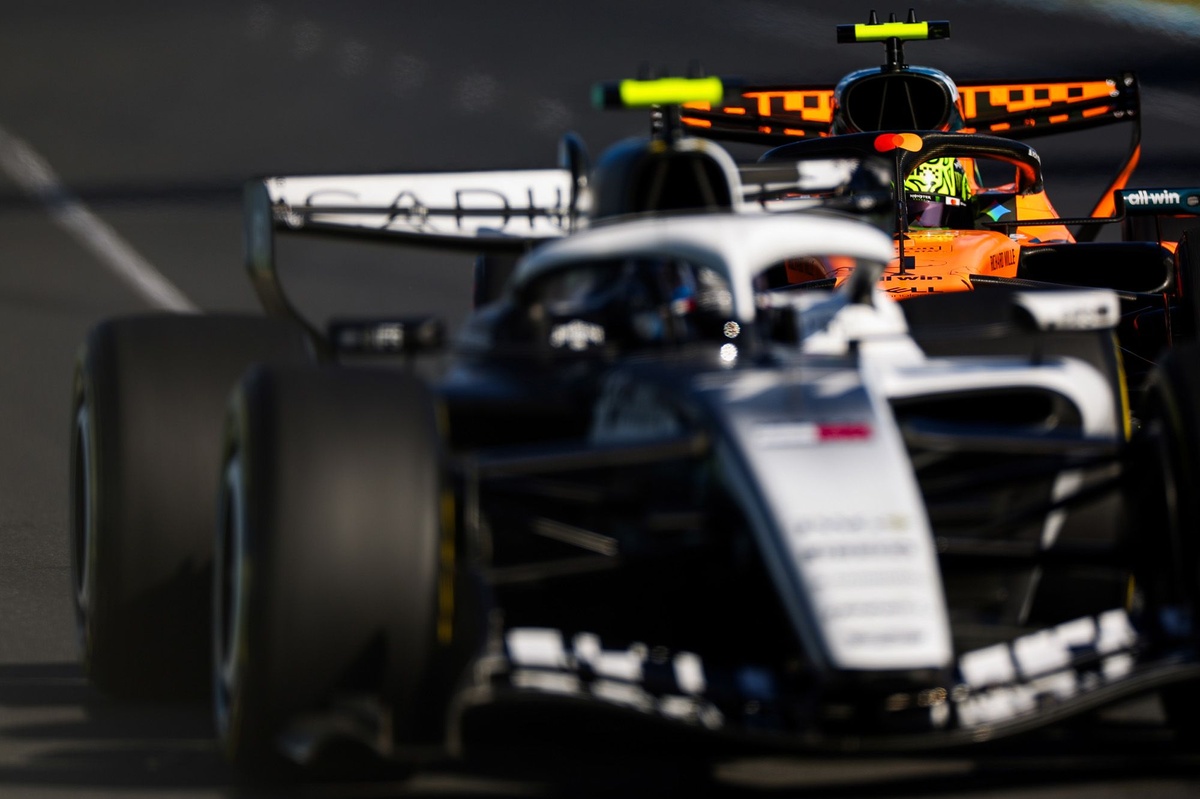
The biggest concern revolves around qualifying out-laps. To adequately charge their batteries, drivers will need to adopt unconventional tactics. This means consciously going slower through certain corners to regenerate energy, while still needing to hit specific straights at flat-out speeds to maximise deployment for the subsequent hot lap. Imagine a scenario where a driver is attempting to slow down through a complex of corners to charge their battery, only to find another driver attempting to push through that section at a higher speed. The potential for miscommunication, frustration, and even incidents is immense.
This delicate balance between charging and deployment creates a direct conflict with traditional qualifying objectives: achieving optimal tyre temperature and clear track space. Drivers usually aim for a smooth, consistent out-lap to bring their tyres into the performance window. The new energy management demands will introduce stop-start elements that could compromise tyre preparation, leading to colder tyres and sub-optimal grip on the flying lap. This complex interplay of factors is a significant reason why the Albert Park's Challenge: F1 2026 Qualifying Chaos Looms large over the weekend.
Traffic Troubles and Strategic Pitfalls
The issue is further compounded by traffic. Formula 1 qualifying is often a high-pressure ballet of timing and positioning, with drivers constantly seeking clear air. Under the 2026 regulations, a driver being held up on a crucial straight where they need to go flat-out for energy deployment could completely ruin their lap and strategic plan. "If you're letting somebody through at the straight where you should be flat out, you're screwed, aren't you?" Komatsu explained. This highlights a scenario where even a momentary impediment can have cascading negative effects on battery charge, tyre temperature, and ultimately, lap time.
The fight for track position during qualifying is already fierce, but these new dynamics will introduce an entirely new layer of aggression and potential for conflict. Drivers will be under immense pressure to execute their energy strategy flawlessly, making them highly sensitive to any external disturbances, especially from slower cars or those on different strategic cycles.
Expert Warnings: Voices from the Paddock
The concerns aren't limited to a single team boss; they are shared across the F1 paddock. Ayao Komatsu's stark warning of "lots of potential for disaster in qualifying" resonates deeply. He stressed the importance of practice sessions, not just for lap time simulation, but for operational simulation of these new energy management strategies. "You cannot go into Q1 and this is the first time you actually go qualifying. No, you've got to use some of the FP1 sessions as your quali simulation, not necessarily in terms of lap time, more in terms of operation."
McLaren chief designer Rob Marshall corroborated this view, expecting the situation to be "very difficult" to handle. He noted the contrast with previous years where planning a qualifying lap was more straightforward. "It's very easy to plan ahead, and in previous years you make your plan and it doesn't really get too upset by what happens 200 yards or 500 yards before the start/finish line, you'd always kind of hit it at the right speed, and you know the amount of energy you had, and didn't really have to worry about it, but now it's quite difficult, you need to actually get it bob-on." He specifically highlighted traffic as a significant exacerbating factor.
Even drivers, the ones ultimately behind the wheel, are voicing their apprehension. Williams driver Alex Albon expressed similar concerns after initial testing, stating, "It's going to be very difficult. We're not seeing the worst of it at the minute; it's already very difficult." He added, "I think even just on our side, some laps you're gaining and losing a lot at that time. It doesn't always make sense behind the wheel, but that's just part of learning carefully." This suggests that even in controlled environments, the complexity of energy management is already proving challenging, underscoring the New F1 Cars: Energy Management to Disrupt Australian GP Quali on a fundamental level.
Strategies to Survive the Chaos: What Teams Will Prioritize
Given these impending challenges, teams will need to develop highly sophisticated strategies to navigate the 2026 Australian Grand Prix qualifying. Here are some key areas they will focus on:
- Extensive Practice Session Simulation: As Komatsu highlighted, Free Practice sessions will be crucial. Teams will run numerous "operational simulations" focusing solely on out-lap energy management, sacrificing traditional lap time performance in practice to perfect their Q1, Q2, and Q3 strategies.
- Optimizing Trade-offs: The key will be finding the best compromise between battery charging, tyre preparation, and outright pace. This might involve new out-lap lines, specific driver inputs at certain corners, and highly choreographed timing strategies.
- Real-time Data and Communication: Engineers will need to provide drivers with highly accurate, real-time data on battery status, energy recovery rates, and tyre temperatures, potentially leading to more intense radio traffic and complex instructions.
- Teamwork and Coordination: In a multi-car team, coordination could become even more critical, perhaps involving one driver assisting another by creating gaps or providing tow opportunities, though this is tightly regulated.
- Adaptive Strategy: The strategy cannot be static. Teams will need to be ready to adapt to changing track conditions, traffic, and unexpected events, with rapid-fire decisions from the pit wall.
The Spectator's View: More Drama, More Unpredictability
For fans, the 2026 Australian Grand Prix qualifying promises a spectacle unlike any other. While the "disaster" scenarios might concern the teams, they could translate into thrilling, unpredictable drama for viewers. We might witness:
- Unexpected Results: The complexity could level the playing field, potentially allowing midfield teams to punch above their weight if they nail their strategy, or top teams to falter with a slight misstep.
- Intense On-Track Battles (Even on Out-Laps): Drivers might be forced into aggressive manoeuvres even on their out-laps to secure clear track space or to manage their energy.
- More Radio Drama: Expect an increase in drivers' frustrated shouts over team radio as they grapple with traffic or sub-optimal energy levels.
- Strategic Masterclasses: The teams that best understand and exploit these new regulations will be lauded for their ingenuity, while those that fail to adapt will face significant penalties.
Ultimately, the australia f1 potential for chaos isn't just a warning; it's a promise of heightened drama, making the 2026 Australian Grand Prix qualifying session one of the most anticipated and potentially defining moments of the new regulatory era.
The 2026 F1 season is set to introduce an unprecedented layer of complexity to qualifying, particularly at demanding circuits like Albert Park. While team principals and drivers express understandable apprehension about the "potential for disaster," this fundamental shift in energy management promises to make the fight for pole position more strategic, more challenging, and ultimately, more captivating than ever before. How teams and drivers adapt to this new paradigm will be fascinating to watch, ensuring that the Australian Grand Prix remains a pivotal moment on the Formula 1 calendar.